The contract on the house in Lely says the roof is from 2004, the seller's disclosure says it has never leaked, and your closing is in three weeks. This site connects you by phone with an independent local roofing contractor who inspects roofs in Collier County.
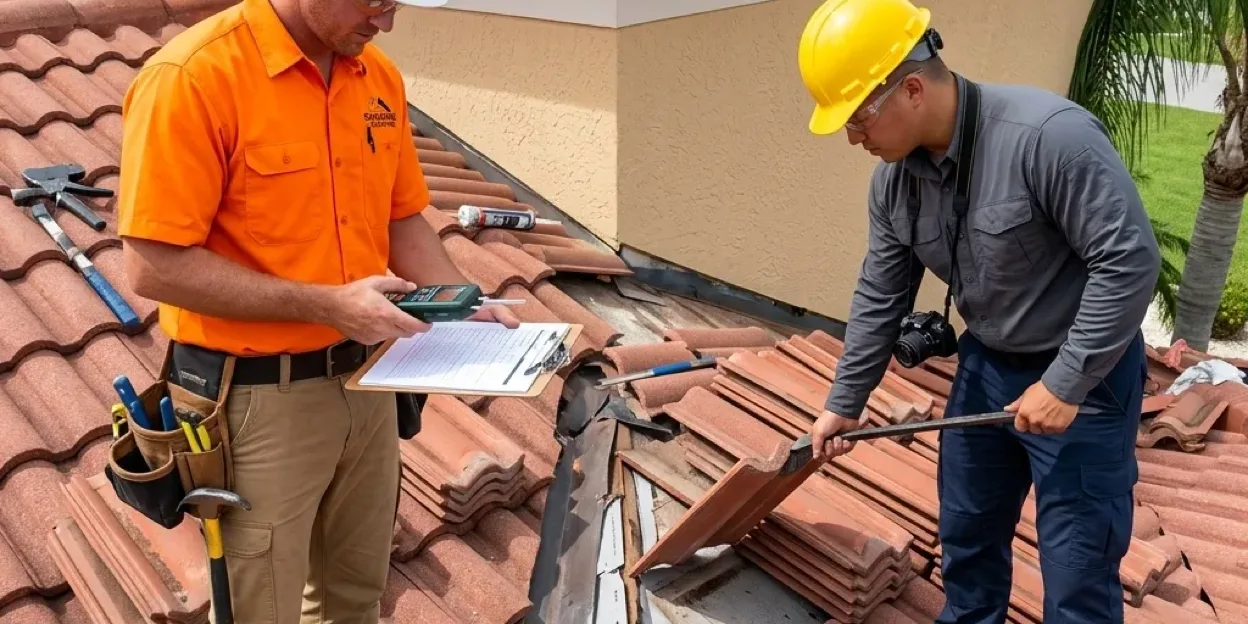
The crew walks the roof where it can be walked safely and looks at the rest from a ladder or a drone. On tile, they lift tile at the eaves, the valleys, and around penetrations to see the underlayment, since the tile hides what matters. On metal, they check screw lines, panel seams, and the closures at the ridge. On shingle, they look for lifted tabs, granule loss, and cracked boots.
Then the attic. Daylight through the deck, stains on the plywood, and rusted nail tips all tell the story the surface does not. The report comes back with photos, an estimate of remaining underlayment life, and a list of what should be fixed now versus watched.
Find the roof's install year. It is on the original permit in the county or city permit portal under the address, and it is often on the wind-mitigation form from the last time the house was insured. Pull the insurer letter if there is one and note what form they want: a 4-point, a wind mitigation, or a roof condition certification.
For a purchase, share the inspection contingency deadline so the report lands in time to negotiate. For a seasonal home, pick a date before you leave, not after you return.
Most inspections on roofs under 12 years old find small things: a cracked tile or two, a pipe boot starting to split, foam at a ridge tile that has let go. Those are repairs. On roofs between 15 and 25 years old, the finding that matters is underlayment condition, and the answer is either a few more years, a lift-and-relay re-underlayment covered on the tile roofing page, or a replacement.
After a named storm, the inspection is a different document. It records what the storm did versus what was already there, and that separation is what an adjuster reads. "The roof is sound" in writing has value all by itself when the insurer asks.
Florida carriers use three separate forms, and a roof inspection may feed any of them. A 4-point inspection covers the roof, electrical, plumbing, and HVAC, and is common on homes over 30 years old. A wind-mitigation inspection on the state's OIR-B1-1802 form records roof covering, deck attachment, roof-to-wall connection, and roof shape, and the credits apply to the wind part of the premium. A roof condition report is what a carrier asks for when it wants to know how much life is left.
Since 2022 a Florida insurer cannot refuse to renew solely for roof age if the roof is under 15 years old, and for older roofs it must accept an inspection showing five or more years of useful life. The Florida Department of Financial Services consumer division explains those rules and handles complaints when a carrier ignores them.
A large share of Collier County homes sit empty from May to November. A documented inspection in April, with a local contact who can meet a crew, is how absentee owners avoid finding July's leak at Thanksgiving.
Have the address, the roof material and year if known, the reason for the inspection (purchase, renewal, storm, season away), and any deadline. Say whether the attic is accessible. Call (239) 341-5474.
 Standing by
Describe the roof in plain words. The call is routed to an independent local roofing contractor who works tile, metal, and shingle roofs in your part of Collier County.
Barrel and flat tile repair, matching for discontinued profiles, and lift-and-relay re-underlayment on Naples tile roofs.
What to photograph, what a written roofing scope gives your adjuster, and how Florida's claim rules work after a storm.
A slipped tile, a lifted shingle, a cracked pipe boot, or a valley that leaks in every afternoon storm, found and fixed before the next one.